
Knee Injuries: A Threat to Basketball Players
Tuesday, 29 April 2025


Many basket players tend to just brush off knee injuries and continue playing. However, ignoring knee injuries can be very risky.
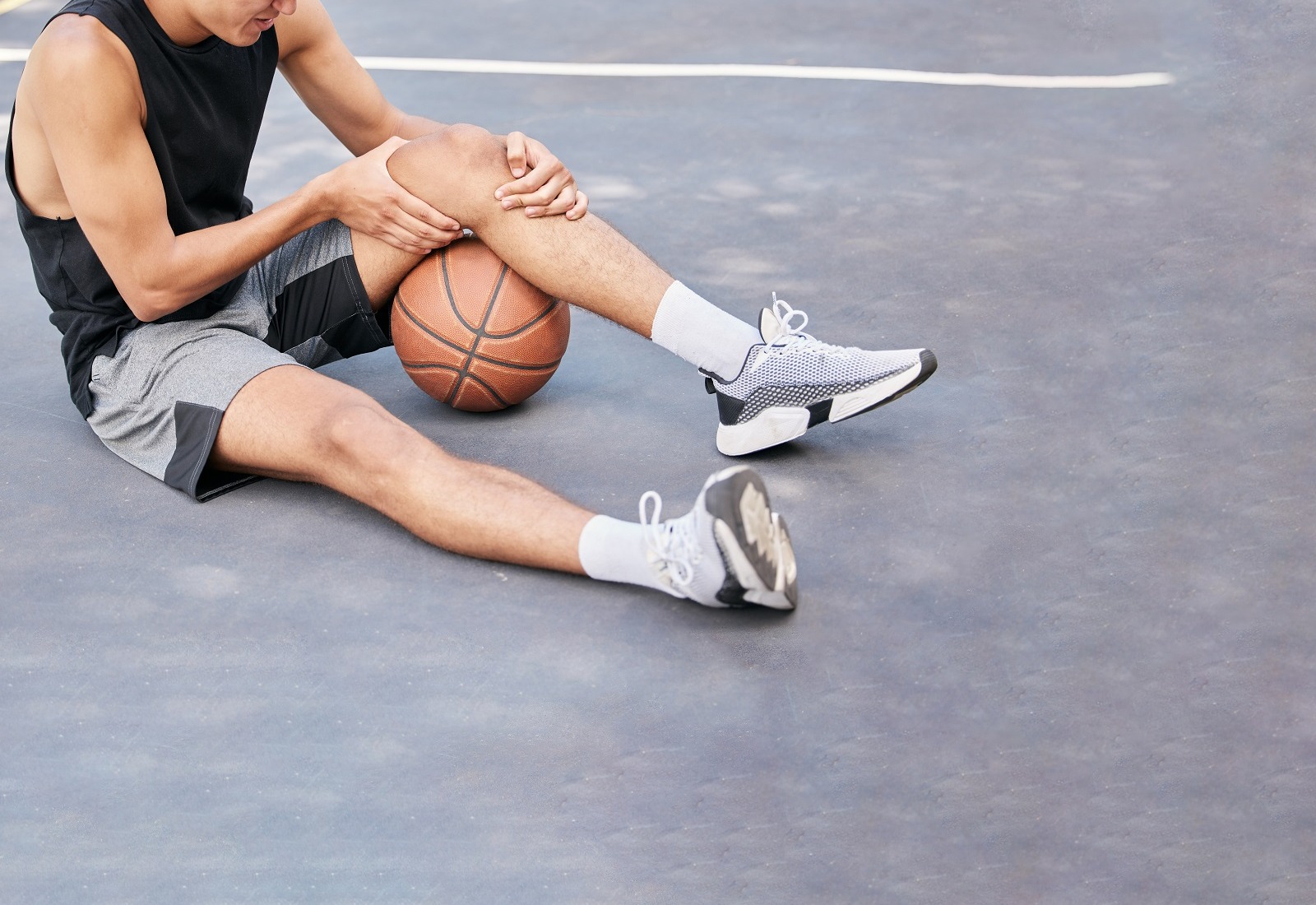
The knee plays a crucial role in supporting body weight. It is responsible for the most active movements in sports, particularly those involving jolting, jumping, twisting, and body contact, such as basketball. This is why knee injuries are very common among basketball players.
Common Knee Injuries in Basketball
Various knee injuries can occur while playing basketball, such as:
1. Anterior cruciate ligament (ACL) injury is damage or tearing of the ligament at the front of the knee, which connects the lower thigh bone to the shin bone and helps maintain knee
stability.
2. A stress fracture is a small crack in the bone caused by repetitive pressure or impact. Stress fractures commonly occur in the lower leg.
3. Meniscus tear occurs in the knee's inner cushioning and typically happens during pivoting or sudden movements.
4. Muscle strain is an injury that occurs when a muscle is stretched or torn due to excessive
use.
The solid structures in the knee are also prone to injuries, such as fractures. To recognize an injury, you can perform a self-check to see if you can stand and walk as usual. If you can, the injury is likely not severe. Next, inspect your knee and look for differences between the right and left knee.
You can also visit the hospital for a thorough check up and to confirm the diagnosis. The doctor will examine your injury and might recommend additional tests like X-rays, CT scans, or MRIs. Once the diagnosis is made, the treatment plan will be based on how severe the injury is. If the ligament is only partially torn or less than 50 percent damaged, physiotherapy might be suggested to help keep your muscles strong.
If the injury is classified as grade 2 or 3, treatment may involve a minimally invasive surgery to reconstruct the ligament with a new one. For larger meniscus tears, a repair procedure might
also be needed to stitch the meniscus back together.
To prevent knee injuries, it's important to strengthen your knee muscles properly. Basketball players should always do warm-ups and cool-downs before and after playing. Warm-ups are essential as they help increase blood flow, improve muscle and joint metabolism, and enhance reflexes. Also, protect your knees by wearing a brace to prevent overuse or overload of the joint.
Knee Injury Recovery
The recovery time for a knee injury depends on the type and severity of the injury. For an ACL injury, a torn or ruptured ligament can be replaced with a tendon from another part of the body. ACL reconstruction typically takes about 4-5 months to return to sports, as this period allows the new ligament to fully integrate with the bone. However, for optimal recovery, it usually takes around 6-8 months. Recovery time can also vary depending on the patient’s age.
Gradual activities and therapies can greatly enhance the recovery process. The medical team at SMIRC offers personalized recovery programs tailored to help patients return to sports. Once the recovery period is complete, it's important to focus on stretching exercises, like jumping drills, proper muscle strengthening, and mental preparation to prevent re-injury.
For moderate to severe injuries, patients are usually recommended to have physiotherapy and, if needed, surgery. Physiotherapy helps with muscle strengthening, increasing joint range of
motion, and relieving tension. TENS therapy and cryotherapy can be effective for reducing pain and swelling, making mechanical exercises more effective and improving overall result.
For muscle strengthening, various exercises can target the muscles supporting the knee, such as the quadriceps, hamstrings, and glutes. These exercises may include isometric exercises,
isotonic exercises, and other strengthening routines.
Reference:
- American Academy of Orthopaedic Surgeons. Anterior Cruciate Ligament Injury. (https://www.orthoinfo.org/). Accessed on 12 January 2024.
- National Institutes of Health. Prevention of Anterior Cruciate Ligament Injury. (https://www.ncbi.nlm.nih.gov/). Accessed on 12 January 2024.
- National Health Service (NHS). Anterior Cruciate Ligament Injury. (https://www.nhs.uk/). Accessed on 12 January 2024.
- MedlinePlus. Anterior Cruciate Ligament Injury. (https://medlineplus.gov/). Accessed on 12 January 2024.
- Verywell Health. Anterior Cruciate Ligament Injury. (https://www.verywellhealth.com/). Accessed on 12 January 2024.